Machines

Friday, December 17, 2010

Superheated steam boilers

A superheated boiler on a steam locomotive
     
          Most boilers produce steam to be used at saturation temperature ; that is , saturated steam. Superheated steam boilers vaporize the water and then further heat the steam in a superheater. This provides steam at much higher temperature , bur can decrease the overall thermal efficiency of the steam generating plant because the higher steam temperature requires a higher flue gas exhaust temperature. There are several ways to circumvent this problem , typically by providing an economizer that heats the feed water , a combustion air heater in the hot flue gas exhaust path or both. There are advantages to superheated steam that may and often will , increase overall efficiency of both steam generation and its utilisation: gains in input temperature to a turbine should outweigh any cost in additional boiler complication and expense. There may also be practical limitations in using wet steam , as entrained condensation droplets will damage turbine blades.
      Superheated steam presents unique safety concerns because , if any system component fails and allows steam to escape , the high pressure and temperature can cause serious , instantaneous harm to anyone in its path. Since the escaping steam will initially be completely superheated vapor , detection can be difficult , although the intense heat and sound from such a leak clearly indicates its presense.
      Superheater operation is similar to that of the coils on an air conditioning unit , although for a different purpose. The steam piping is directed through the flue gas path in the boiler furnace. The temperature in this area is typically between 1,300-1,600 degree Celsius (2,372-2,912°F). Some superheaters are radiant type ; that is , they absorb heat by radiation. Others are convection type , absorbing heat from a fluid such as a gas. Some are a combination of the two types. Through either method , the extreme heat in the flue gas path will also heat the superheater steam piping and the steam within. While the temperature of the steam in the superheater rises , the pressure of the steam does not : the turbine or moving pistons offer a continuously expanding space and the pressure remains the same as that of the boiler. Almost all steam superheater system designs remove droplets entrained in the steam to prevent damage to the turbine blading and associated piping.

Tuesday, December 7, 2010

Hydronic Boilers

Hydronic Boilers

      Hydronic boilers are used in generating heat for residential and industrial purposes. They are the typical power plant for central heating systems fitted to houses in northern Europe (where they are commonly combined with domestic water heating) , as apposed to the forced-air furnaces or wood burning stoves more common in North America. The hydronic boiler operates by way of heating water/fluid to a preset temperature (or sometimes in the case of single pipe systems , until it boils and turns to steam) and circulating that fluid throughout the home typically by way of radiators , baseboard heaters or through the floors. The fluid can be heated by any means...gas , wood , fuel oil etc.. , but in built-up areas where piped gas is available , natural gas is currently the most economical and therefore the usual choice. The fluid is in an enclosed system and circulated throughout by means of a motorized pump. The name "boiler" can be a misnomer in that , except for systems using steam radiators , the water in a properly functioning hydronic boiler never actually boils. Most new systems are fitted with condensing boilers for greater efficiency. These boilers are referred to as  condensing boilers because they condense the water vapor in the flue gases to capture the latent heat of vaporization of the water produced during combustion.
   
    Hydronic systems are being used more and more in new construction in North America for several reasons. Among the reasons are :

* They are more efficient and more economical than forced-air systems (although initial installation can be
   more expensive , because of the cost of the copper and aluminium).
* The baseboard copper pipes and aluminium fins take up less room and use less metal than the bulky steel
  ductwork required for forced-air systems.
* They provide more even , less fluctuating temperatures than forced-air systems. The copper baseboard pipe
   hold and release heat over a longer period of time than air does , so the furnace does not have to switch off
   and on as much.(Copper heats mostly through conduction and radiation , whereas forced-air heats mostly
   through forced convection. Air has much lower thermal conductivity and volumetric heat capacity than
   copper , so the conditioned space warms up and cools down more quickly than with hydronic)
* They tend to not dry out the interior air as much as forced air systems , but this is not always true. When
   forced air duct systems are air-sealed properly and have return-air paths back to the furnace (thus reducing
   pressure differentials and therefore air movement between inside and outside the house) this is not an issue.
* They do not introduce any dust , allergens , mold or (in the case of a faulty heat exchanger) combustion by
   products into the living space.

Forced-air heating does have some advantages , however.            

Monday, November 29, 2010

Boiler Accessories

Boiler fittings and accessories

    * Safety valve :
         It is used to relieve pressure and prevent possible explosion of a boiler.

    * Water level indicators :
          They show the operator the level of fluid in the boiler , also known as a sight glass , water gauge orwater column is provided.

    * Bottom blowdown valves :
          They provide a means for removing solid particulates that condense and lie on the bottom of a boiler. As the name implies , this valve is usually located directly on the bottom of the boiler and is occasionally opened to use the pressure in the boiler to push these particulates out.

    * Continuous blowdown valve :
          This allows a small quantity of water to escape continuously. Its purpose is to prevent the water in the boiler becoming saturated with dissolved salts. Saturation would lead to foaming and cause water droplets to be carried over with the steam - a condition known as priming. Blowdown is also often used to monitor the chemistry of the boiler water.

    * Flash tank :
          High pressure blowdown enters this vessel where the steam can 'flash' safely and be used in a  low-pressure system or be vented to atmosphere while the  ambient pressure blowdown flows to drain.

    * Automatic blowdown/continuous Heat Recovery system :
          This system allows the boiler to blowdown only when makeup water is flowing to the boiler , thereby transferring the maximum amount of heat possible from the blowdown to the makeup water. No flash tank is generally needed as the blowdown discharged is close to the temperature of the makeup water.

    * Hand holes :
          They are steel plates installed in openings in "header" to allow foe inspections & installation of tubes and inspection of internal surfaces.

    * Steam drum internals :
          A series of screen , scrubber & cans(cyclone separators).

    * Low-water cutoof :
          It is a mechanical means (usually a float switch) that is used to turn off the burner of shut off fuel to the boiler to prevent it from running once the water goes below a certain point. If a boiler is "dry-fired" (burned without water in it) it can cause rupture or catastrophic failure.

    * Surface blowdown line :
          It provides a means for removing form or other lightweight non-condensible substance that tend to float on top of the water inside the boiler.

    * Circulating pump :
          It is designed to circulate water back to the boiler after it has expelled some of its heat.

    * Feedwater check valve or clack valve :
          A non-return stop valve in the feedwater line. This may be fitted to the side of the boiler , just below the water level or to the top of the boiler.

    * Top feed :
          A check valve (clack valve) in the feedwater line , mounted on top of the boiler. It is intended to reduce the nuisance of limescale. It does not prevent limescale formation but causes the limescale to be precipitaed in a powdery form which is easily washed out of the boiler.

    * Desuperheater tubes or bundles :
          A series of tubes or bundles of tubes in the water drum or the steam drum design to cool superheated steam. Thus is to supply auxiliary equipment that doesn't need  or may be damaged by or dry system.

    * Chemical injection line:
          A connection to add chemicals for controlling feedwater pH.

Friday, November 19, 2010

Safty

What Caused the Boiler Explosion at the Ford Rouge Plant
      Historically , boilers were a source of many serious injuries and property destruction due to poorly understood engineering principles. Thin and brittle metal shells can rupture , while poorly welded or riveted seams could open up , leading to a violent eruption of the pressurized steam. Collapsed or dislodged boiler tubes could also spray scalding-hot steam and smoke out of the air intake and firing chute , injuring the firemen who loaded coal into the fire chamber. Extremely large boilers providing hundreds of horsepower to operate factories could demolish entire buildings.

Boiler Explosion At York Rolling MIlls Kills 9 Men; 20 injured

      A boiler that has a loss of feed water and is permitted to boil dry can be extremely dangerous. If feed water is then  sent into the empty boiler , the small cascade of incoming water instantly boils on contact with the superheated metal shell and leads to a violent explosion that cannot be controlled even by safety steam valves. Draining of the boiler could also occur if a leak occurred in the steam supply lines that was larger than the make-up water supply could replace. The Hartford Loop was invented in 1919 by the Hartford Steam Boiler and insurance company as a method to help prevent this condition from occurring and thereby  reduce their insurance claims.

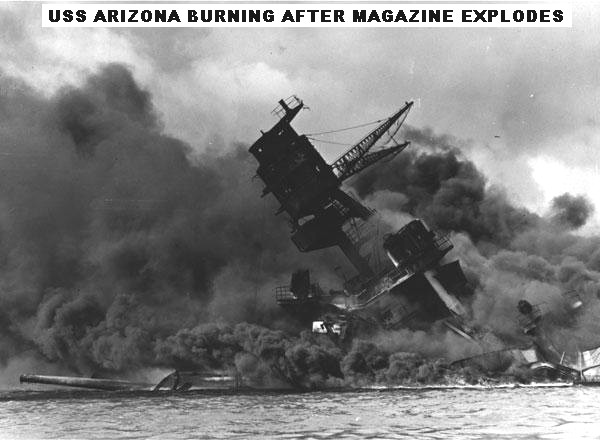
A boiler explosion would not have caused the forward decks to collapse

Thursday, November 18, 2010

Configurations

Configurations

      Boilers can be classified into the following configurations :

* "Port boilers" or "Haycock boilers" : a primitive "kettle" where a fire heats a partially-filled water container
   from below. 18th century Haycock boilers generally produced and stored large volumes of very
   low-pressure
   steam , often hardly above that of the atmosphere. These could burn wood of most often , coal. Efficiency
   was very low.
* Fire-tube boilers. Here , water partially fills a boiler barrel with a small volume left above to accommodate
   the steam (steam space). This is the type of   boilers used in nearly all steam locomotives. The heat source is
   inside a furnace or firebox that has to be kept permanently surrounded by the water in order to maintain the
   temperature of the heating surface just below boiling point. The furnace can be situated at one end of
   fire-tube which lengthens the path of the hot gases , thus  augmenting the heating surface which can be
   further increased by making the gases reverse direction through a second parallel tube or a bundle of
   multiple tubes (two-pass or return flue boiler) ; alternatively the gases may be taken along the sides and then
   beneath the boiler through flues (3-pass boiler). In the case of a locomotive-type boiler , a boiler barrel
   extends from the firebox and the hot gases  pass through a bundle of fire tubes inside the barrel which
   greatly increase the heating surface compared to a single tube and further improve heat transfer. Fire-tube
   boilers usually have a comparatively low rate of steam production , but high steam storage capacity.
   Fire-tube boilers mostly burn solid fuels, but are readily adaptable to those of the liquid or gas variety.
* Water-tube boiler. In this type , the water tubes are arranged inside a furnace in a number of possible
   configurations : often the water tubes connect large drums , the lower ones containing water and the upper
   ones , steam and water ; in other cases , such as a monotube boiler , water is circulated by a pump through
   a succession of coils. This type generally gives high steam production rates , but less storage capacity than
   the above. Water tube boilers can be designed to exploit any heat source and are generally preferred in high
   pressure applications since the high pressure water/steam is contained within small diameter pipes which can
   withstand the pressure with a thinner wall.
* Flash boiler. A specialized type of water-tube boiler.

1950s design steam locomotive boiler , from a victorian Railways J class
      * Fire-tube boiler with water-tube firebox. Sometimes the two above types have been combined in the
         following manner : the firebox contains an assembly of water tubes , called thermic syphons. The gases
         then pass through a conventional firetube boilers. Water-tube firebox were installed in many Hungarian
         locomotives , but have met with little success in other countries.
      * Sectional boiler. In a cast iron sectional boiler , sometimes called a "pork chop boiler" the water is
         contained inside cast iron sections. These sections are assembled on site to create the finished boiler.

Fuel

Fuel


The source of heat for a boiler is combustion of any of  sevaral fuels , such as wood , coal , oil or natural gas. Electric steam boilers use resistance or immersion-type heating elements. Nuclear fission is also used as a heat source for generating steam. Heat recovery steam generators  (HRSGS) use the heat rejected from other processes such as gas turbines.

Tuesday, November 16, 2010

Boiler

Materials

1950s design steam locomotive boiler , from a Victorian Railways J class
     The pressure vessel in a boiler is usually made of steel (or alloy steel) , or historically of wrought iron. Stainless steel is virtually prohibited (by the ASME Boiler Code) for use in wetted parts of modern boilers , but is used often in superheater sections that will not be exposed to liquid boiler water. In live steam models , copper or brass is often used because it is more easily fabricated in smaller size boilers. Historically , copper was often used for fireboxes (particularly for steam locomotives) , because of its better formability and higher thermal conductivity ; however , in more recent times , the high price of copper often makes this an uneconomic and cheaper substitutes (such as steel) are used instead.
      For much of the victorian "age of steam" , the only material used for boilermaking was the highest grade of wrought iron , with asembly by rivetting . This iron was often obtained from specialist ironworks , such as at cleartor Moor (UK) , noted for the high quality of their rolled plate and its suitability for high-reliability use in critical applications , such as high-pressure boilers. In the 20th century , design practice instead moved towards the use of  steel , which is stronger and cheaper , with welded construction , which is quicker and requires less labour.

Diagram of a water-tube boiler

      Cast Iron may be used for the heating vessel of domestic water heaters. Although such heaters are usually termed "boilers" in some countries , their purpose is usually to produce hot water , not steam and so they run at low pressure and try to avoid actual boiling. The brittleness of cast iron makes it impractical for high pressure steam boilers.

Diagram of a fire-tube boiler